-
Sumba Sherpa (Co-Founder & CEO)
+977-9849643731
Since 1998 15,000+ Happy Guests Sherpa Owned & Operated Company
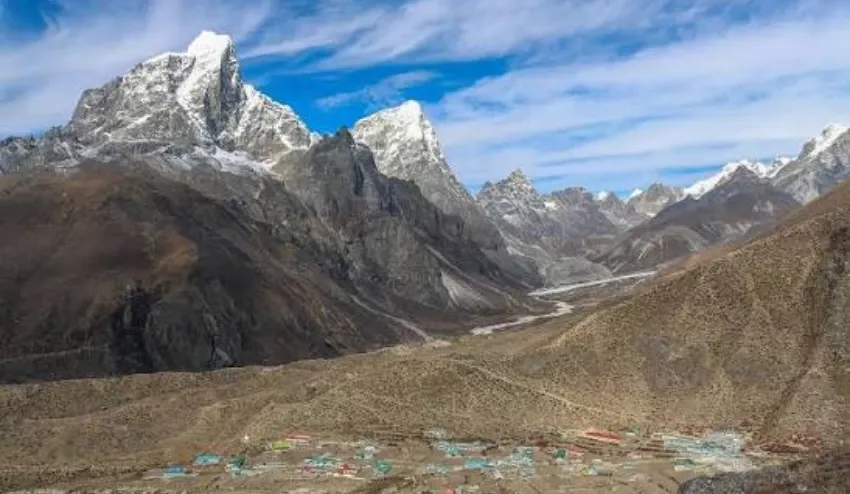
Deciding between the Everest Base Camp Trek and the Gokyo Ri Trek can be tough, as both routes offer a once-in-a-lifetime experience trekking in Nepal's Everest region. However, they are not quite the same.
The Everest Base Camp Trek is the most popular and traditional trek to Everest Base Camp, the Khumbu Valley, and the Everest trekking trail.
The Gokyo Ri Trek provides a different experience. While the route is less traveled, it is renowned for its stunning Gokyo Lakes, the Ngozumpa Glacier, breathtaking mountain scenery, and a less crowded trail.
Neither is necessarily better for everyone. EBC can be very busy, and you have to face some tough days at a high altitude. Gokyo Ri also involves climbing steeply up to the viewpoint and needs to be properly acclimatized.
So there you have it. But which trek should you do? Well, it's all a matter of what you're looking to achieve, your fitness level, how much time you have, what kind of scenery you want to see, and how you want to experience the Everest region.
| Factor | Everest Base Camp Trek | Gokyo Ri Trek |
| Main objective | Reach Everest Base Camp | Reach Gokyo Ri and explore Gokyo Lakes |
| Region | Khumbu / Everest | Khumbu / Everest |
| Main highlights | Everest Base Camp, Khumbu Glacier, Sherpa villages | Gokyo Lakes, Gokyo Ri, Ngozumpa Glacier |
| Scenery | Classic Everest landscapes, glaciers and valleys | Lakes, glaciers and wide Himalayan panoramas |
| Difficulty | Challenging because of altitude and sustained trekking | Challenging because of altitude and the climb to Gokyo Ri |
| Trail atmosphere | Generally busier | Often quieter |
| Cultural experience | Strong Sherpa culture and monasteries | Strong Sherpa culture and mountain villages |
| Best suited to | Travelers who want the iconic EBC experience | Travelers who prioritize lakes, scenery and a quieter route |
EBC is better for those who just want to get to the iconic base camp, whereas Gokyo Ri is probably better for those who value the views and smaller crowds more.
The Everest Base Camp Trek is the traditional trek to the southern foot of Everest through the Khumbu region. What draws many travelers from overseas is not just the goal of reaching the Base Camp itself but the dramatic transition in scenery and culture on the route.
Most trips start with a trip from Kathmandu in the direction of Lukla, from there progresses with trekking toward Namche Bazaar and the North Khumbu Valley. The path then passes to Tengboche, Dingboche, Lobuche, Gorak Shep and finally climbs up to Everest Base Camp.
For those who are able to plan accordingly, you can also look at the complete Everest Base Camp trek itinerary for more on day-to-day walking as well as the standard acclimatization schedule.
An advantage of the EBC route is the range of different environments that make up one trek. The first part of the lower section moves through woodland and village terrain, though the terrain is increasingly alpine.
Namche Bazaar is an important acclimatization overnight stop and opportunity for trekkers to see the life of one of the best-known settlements in the Everest region. As you ascend the trail, the scenery becomes less gentle with glacial valleys, rocky slopes and spectacular mountain views.
Tengboche is another significant cultural point. The monastery and the mountain scenery all around it help form a link with the local Buddhist culture of the Khumbu region.
If you are a traveler who would like to learn about the culture of the route, this can be a little helpful before or during your trek.
The last route to Gorak Shep and the Everest Base Camp is very different again. By now the scenery is mainly rocks, ice and high mountains.
The primary reason is simple: they are after Everest Base Camp.
One gets a feeling of accomplishment when finally reaching the base camp of Everest expeditions after traveling through the Khumbu Valley. During the journey, one passes through Sherpa villages, Buddhist monasteries, glaciers, suspension bridges, and some of the most famous mountain scenery in the world.
The trail is also well set up for trekking, with many teahouses and lots of information readily available for first-time trekkers.
But EBC does have its faults. Due to its popularity, certain parts of the route can get crowded, especially during the peak trekking seasons. Accommodation in the more popular villages can also be in high demand. The altitude is another important factor to bear in mind, and don‚t assume that because it's a popular route it‚s a straightforward route.
First-time high-altitude hikers could use the guide to Everest Base Camp Trek for Beginners for a good overview of the physical and practical preparations needed.
The Gokyo Ri Trek offers trips to yet another section of the Everest region, in particular the Gokyo Valley and the Gokyo Lakes.
Instead of taking the classical route to EBC all the way to Gorak Shep, the trail leads to the Gokyo Valley. A usual trek includes the trail to Namche Bazaar and then to Dole, Machhermo and Gokyo.
The precise route will differ from trip to trip, but the general focus is on the glaciers and mountain views, particularly over the high lakes of the Gokyo Valley.
For those planning on doing the Gokyo Ri Trek particularly, then check the Gokyo Ri Trek guide for the route in detail.
The scenery is the main attraction.
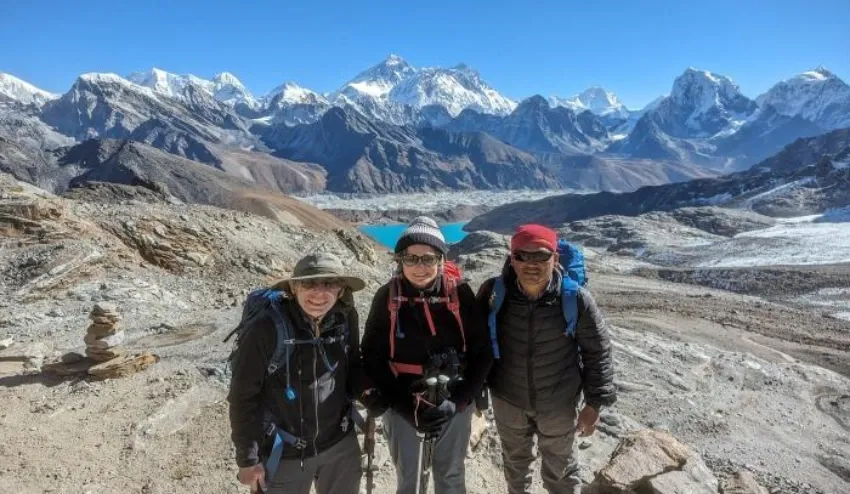
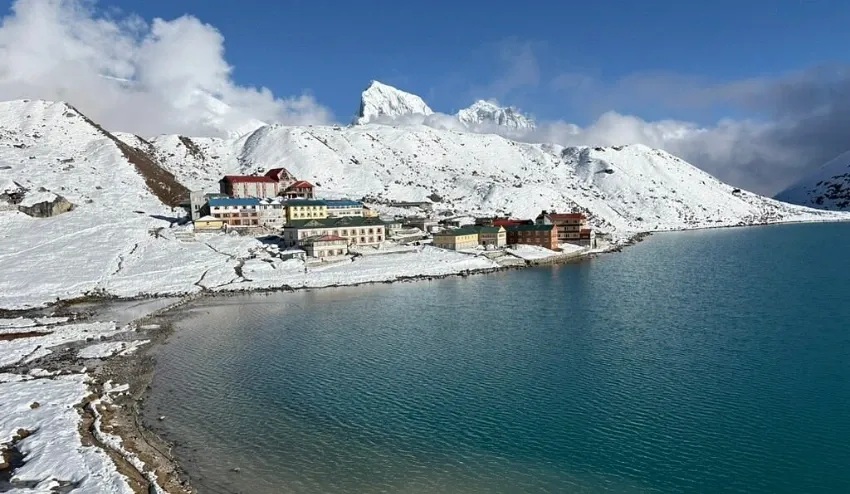
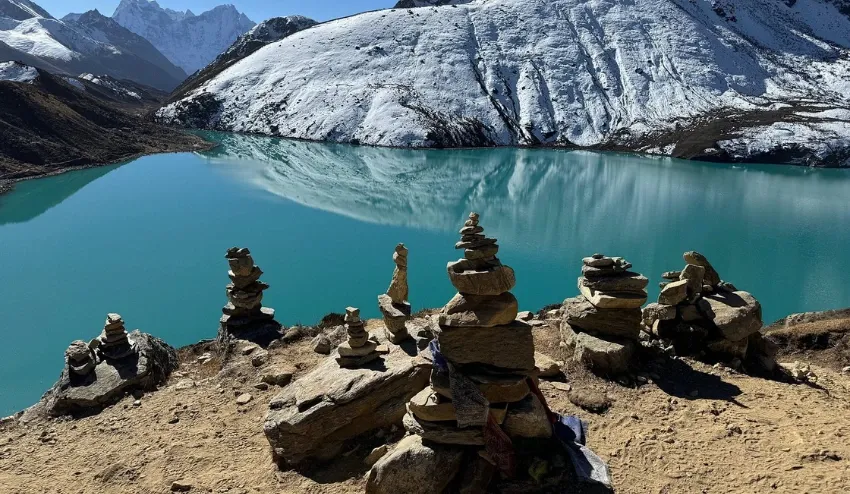
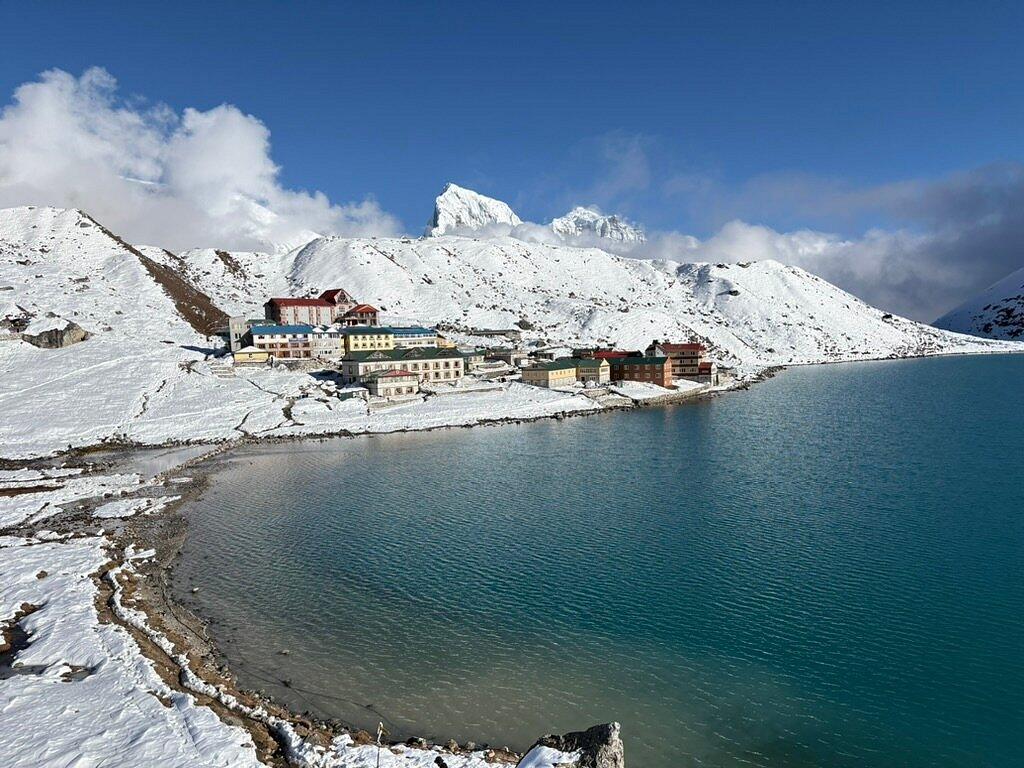
The Gokyo Valley is also famous for a number of glacial lakes, and Gokyo Ri offers a panoramic view of the peaks of the eastern Himalayas. The landscape surrounding the valley consists of the Ngozumpa Glacier.
If a traveler is more interested in landscapes rather than the well-known trekking venues, this can be a big advantage.
Gokyo Ri often feels less busy than some of the more populated sections of the traditional Everest Base Camp trek. This doesn't imply that it is devoid of visitors. A popular time for trekking can still attract a crowd, and certain segments are shared with the EBC trail.
Limitations apply here also. The ascent of Gokyo Ri is a tough one and is tiring at the best of times thanks to the high altitude. Those arriving unprepared for the increased altitude could find this walk a challenge. The views depend on the weather conditions and therefore are not guaranteed.
The quickest way to illustrate the distinctions is to decide what your main trekking destination will be.
In this trek, the destination is a pretty big deal! You are heading towards one of the most iconic mountain sights on earth.
This trek is more about the land as a whole, with the lakes, glacier, valley, and the high viewpoint all attracting me to this part of the trek.
That doesn't make one pathway any more preferable than the other. They just supply you with different reasons as to why you should make the journey.
EBC is logical if you've had Everest Base Camp on your wish list, are interested in trekking the traditional Khumbu route, and want to visit the Everest expedition sites.
This route is also well targeted at those travelers who thrive on the social aspect of a heavily travelled trekking route and who will make use of the wide range of teahouses and trekking services available.
The snag is that the popularity can take away the feeling of solitude. Sometimes it is busy on the trail and in the accommodation area.
If lakes, glaciers, and breathtaking views of the mountains are among your top priorities, then Gokyo Ri may be very appealing to you.
Gokyo Lakes combined with the view from Gokyo Ri help to define the visual character of this trek, and it can also be appropriate for those who like a little more quietness to their journey.
Drawback of it is that the approach to the viewpoint is a strenuous climb at altitude, so though it can be quieter, this is not a "laid back" alternative.
This is one of those difficult questions to answer, because it all depends on what you want to see "better".
The EBC route provides the archetypal Everest-area terrain, with towering valleys, glaciers, Sherpa villages and panoramas of the major peaks of the Himalayan range en route to Base Camp.
Gokyo Ri presents a different scene. The Gokyo Lakes are a unique feature that isn't part of the standard EBC trek, and the viewpoint allows trekkers the chance to witness a wide mountain view.
EBC could be more satisfying if you're aiming to capture the iconic Everest trekking scenery and get to Base Camp.
However, if you're more keen on lakes, glaciers and vast mountain views, Gokyo Ri might be your best option.
Weather is just as critical. In even the most suitable season, clouds can block views of the mountains. Selecting a route should not be based on the hope of getting good views at every vantage point.
Those who are in need of choosing among many other beautiful Himalayan trekking routes may refer to 10 Best Himalayan Treks for Stunning Views.
It's not right to categorize either trek as easy or difficult.
Both scenarios involve multi-day walking at high altitude. How hard one person finds it may vary markedly from another person's experience.
The EBC route involves multiple days of trekking over consecutive days into higher altitudes. The itinerary provides for long days of walking and proper acclimatization.
Like Gokyo, altitude remains a significant consideration. The ascent from the Gokyo Valley to the Gokyo Ri viewpoint is another long and steep one. Even those who normally have no problem walking for hours at a time will find this hard going.
The current Everest Base Camp Trek Difficulty Guide gives much more information regarding the general physical effort required for the classical route.
Your experience will depend on several factors:
Therefore, it is not reliable to judge the two routes simply on the length in miles or on the number of walking days.
An itinerary that is not rushed and allows for adequate acclimatization really can have a big impact on the experience.
Altitude is definitely one of the most significant things to look at in the EBC vs. Gokyo Ri debate.
The higher you go in the Khumbu, the longer it takes for your body to adjust to the thin air; a slowly paced itinerary with rest days is needed in both approaches.
Travelers need to go at a good, comfortable pace, drink plenty of fluids, get rest, and go slowly to higher elevations.
You may have noticed that the section about proper acclimatization during the EBC trek in the guide discusses the importance of traveling at a safe altitude.
Likewise, Gokyo Ri. The remote trail doesn't necessarily make it a lower-altitude trek, just a quieter one. Both hikes demand an understanding of the mountain and common sense.
If you want to steer clear of the crowds, then Gokyo Ri might be a better option.
The Everest Base Camp trek is one of the most popular treks in Nepal. During the two main trekking seasons, the trek route passing through Namche Bazaar, Tengboche, and the trail leading to Everest Base Camp gets rather crowded.
Compared to the shared trail on the way to Gokyo Ri, the environment here tends to be quieter. Nevertheless, the trek to Gokyo should not be isolated. This place is also frequented.
EBC is a more established and social trip, while Gokyo Ri can provide a more peaceful atmosphere.
Both routes allow you to experience the culture of the Khumbu.
As well as the stunning mountain views, the trails also offer cultural delights such as Sherpa settlements, Buddhist monasteries and prayer wheels, mani walls and teahouses. All these experiences are part of trekking in Nepal and not just the views of Mount Everest.
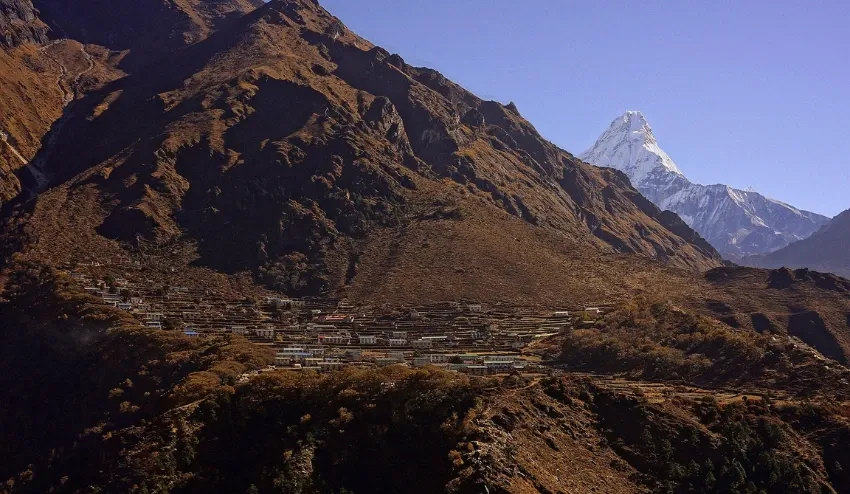
Buses. A key point on both trekking journeys.05 Namche Bazaar Namche is a significant village in the Khumbu region and is a frequent stopping-off point to enable one's acclimatisation.
For more information on the area, see this guide to Namche Bazaar.
For international visitors who are going deeper into the mountains after Namche, it is a good place to acclimatize.
The EBC route also includes Tengboche, famous for its mountain views and monastery.
The cultural aspect of the journey can be just as significant as the goal itself. Those wishing to learn more about the cultural aspect of this route can find out more about Tengboche Monastery.
Gokyo Ri provides a contrast to that of Everest Village. It brings in other villages like Dole and Machhermo on the path to Gokyo Valley.
How many days? It depends on your itinerary, extra acclimatization, and the plan, such as adding extra viewpoints or combining both routes.
Most well-paced itineraries in the Everest Base Camp Trek are more than two weeks long. For instance, the Everest Base Camp Trek - 17 Days incorporates time for trekking and acclimatization instead of rushing through the route.
It can be done in the same length of time. In fact, there is a Gokyo Lake and Gokyo Ri Trekking - 15 Days itinerary which is centered around Gokyo Valley, Gokyo Lakes and the Gokyo Ri viewpoint.
However, if you are keen to avoid such a dilemma, then a combined itinerary takes more time. Although an EBC Gokyo Cho La Pass Trek allows you to link Everest Base Camp with Gokyo Valley, it takes a longer, more challenging route.
Overseas travelers planning to visit Nepal might want to include some buffer days to their schedule.
The weather can impact flights to Lukla from Kathmandu, especially on bad-weather days or when there is fog or overcast. It is therefore recommended to have an extra day allocated if this coincides with an international departure.
This is critical if you have a set international flight back.
There is no one-price-fits-all for either trek.
Cost varies according to each itinerary, accommodation, porter and guide service, transportation, permit, equipment, and individual expenses.
For both routes, your budget may include:
For a more detailed breakdown, see the Gokyo Ri Trek Cost guide.
Travelers considering EBC can also compare the expected expenses in the guide to the Everest Base Camp Trek cost.
Teahouse trekking is one of the trademarks of both routes.
The common form of accommodation for trekkers is in a local lodge or teahouse situated along the trail. One gets to experience a more simple way of life, and accommodation becomes quite primitive as you reach the higher altitudes, though standards may differ from one village to another.
The accommodation throughout the range has tended to be basic, and shared facilities are the norm at the higher points.
For meals, we can eat in a teahouse. The menus have mainly the same people who go trekking, but also a few local dishes like dal bhat.
The EBC route is better served with lodges due to its popularity. There is also teahouse accommodation in Gokyo, albeit with less variety.
Knowing what a lodge on the Everest trek is like before you go is a good idea so you can have more realistic ideas.
For both treks, the ideal time is around springtime (March-May) and autumn (September-November). This is when you'll encounter preferable weather conditions for trekking, as well as superb vistas of the mountains.
Winters are colder, especially at higher levels. Monsoon is often wetter, with rain, clouds, and a greater level of unpredictability.
For a more detailed seasonal guide, see Best Time to Trek Everest Base Camp.
Both treks could be suitable for first-time trekkers in the Himalaya with the right preparation.
Everest Base Camp might be the best option if comfort is your main priority. If you need a route that has better trekking facilities and a proper path, then Everest Base Camp is likely to suit you best. For the first-time trekker who wants lakes, viewpoints and fewer people, Gokyo Ri is likely to be best.
Your fitness, acclimatization and available time are more important than simply being a first-time trekker.
For basic preparation, the guide to Nepal trekking for beginners can be useful.
EBC provides a classic view of the Everest region with vistas of the mountain range, glaciers, mountain valleys, and the approach to Everest Base Camp.
The lakes and glaciers and the views from the viewpoint make Gokyo Ri a beautiful and popular destination.
If the main goal is Everest Base Camp, then EBC is the way to go. If it's nice lakes and wide mountain views, then Gokyo Ri might be just the thing.
Yes. Travelers who have a lot of time and are well physically prepared can do both routes.
A combined Gokyo trek may comprise all or some of Gokyo Valley, Gokyo Ri and Everest Base Camp, occasionally crossing the Cho La pass from one region to the other.
This allows for more variety but also results in more walking days and more physical activity. For those wanting to trek through both regions, an option would be the EBC Gokyo Cho La Pass Trek.
The decision mainly comes down to your priorities.
| If You Want | Consider |
| To reach Everest Base Camp | Everest Base Camp Trek |
| Classic Everest trekking | Everest Base Camp Trek |
| Gokyo Lakes and glaciers | Gokyo Ri Trek |
| Panoramic mountain views | Gokyo Ri Trek |
| A generally quieter trail | Gokyo Ri Trek |
| Both destinations | Combined EBC + Gokyo route |
Neither trek is universally better. Choose the route that matches the experience you want.
The final analysis is, it really depends on what you value most.
If you aim to get to the fabled Base Camp, sample the legendary Khumbu trek and visit the iconic sights along the way, then the Everest Base Camp route is what you should pick.
Gokyo Ri - if you like high lakes, glaciers, great views and a bit less busy trek, this is the place.
If you have time to spare and intend to have the broadest journey through the Everest region, a combined trek should be looked at.
Before booking either trek, consider:
The priority should be having a practical trip, it would be better to have a longer trip than a shorter trek.
Indeed, most of the trekking is focused on the lakes, glaciers, and stunning views of the Himalayan mountain range.
Gokyo Ri is an alternative experience to EBC and not a replacement. The classic Everest Base Camp route is, after all, still an option for those whose ultimate destination is Everest Base Camp itself.
What you need to decide is what you would like to remember most from your time in the Everest region.
It is possible, but EBC is one of the most popular treks in Nepal, so it can get crowded in high season.
Is it worth it to have other travelers around when tackling Everest? If you are mainly looking to get to Base Camp, then you might find the trail's popularity a tolerable price to pay. If you are seeking more peaceful surroundings, then Gokyo Ri might be the better environment.
Both Everest Base Camp and Gokyo Ri are excellent Himalayan treks, but they offer different experiences.
Choose EBC for the iconic Everest Base Camp experience, classic Khumbu landscapes and famous trekking landmarks.
Choose Gokyo Ri for Gokyo Lakes, glaciers, panoramic mountain views and a generally quieter route.
Choose a combined trek if you have enough time and want to experience both sides of the Everest region.
There is no universally better trek. The best choice is the one that fits your time, fitness, interests and expectations.
Both are tough high-altitude treks. Gokyo Ri is a steep climb to the viewpoint. EBC involves several very demanding days at high altitude.
2. Which is better for first-time trekkers?
Both are suitable for first-time trekkers who are prepared. EBC might appear simpler because of its well-beaten trail and facilities.
3. Which has better views, EBC or Gokyo Ri?
Depends on what you want. EBC offers classic Everest scenery while Gokyo Ri is famous for lakes, glaciers, and panoramic mountain views.
4. How high is Everest Base Camp?
Everest Base Camp is approximately 5,364 meters (17,598 feet) above sea level.
5. How high is Gokyo Ri?
Gokyo Ri is approximately 5,357 meters (17,575 feet) above sea level.
6. Can you combine Gokyo Ri and Everest Base Camp?
Yes, for those who have the time and the energy, it's possible to do both sides of the trek, primarily utilizing the Cho La Pass.
7. Which trek is less crowded?
Gokyo Ri is generally quieter than the main EBC route. However, it can still become busy during the peak trekking seasons.
8. What is the best time for both treks?
Spring and autumn are the most favored seasons for both routes as they offer the best trekking conditions and mountain views.
9. Do I need a guide for these treks?
Always check the latest regulations before travelling as requirements can change. It may also be best to hire a licensed guide at high altitude.
10. Which trek should I choose?
Choose EBC if you want the traditional Everest adventure. If you prefer lakes, glaciers and incredible views, go for Gokyo Ri. And if you have the time, take the two.