
-
Sumba Sherpa (Co-Founder & CEO)
+977-9849643731
Since 1998 15,000+ Happy Guests Sherpa Owned & Operated Company
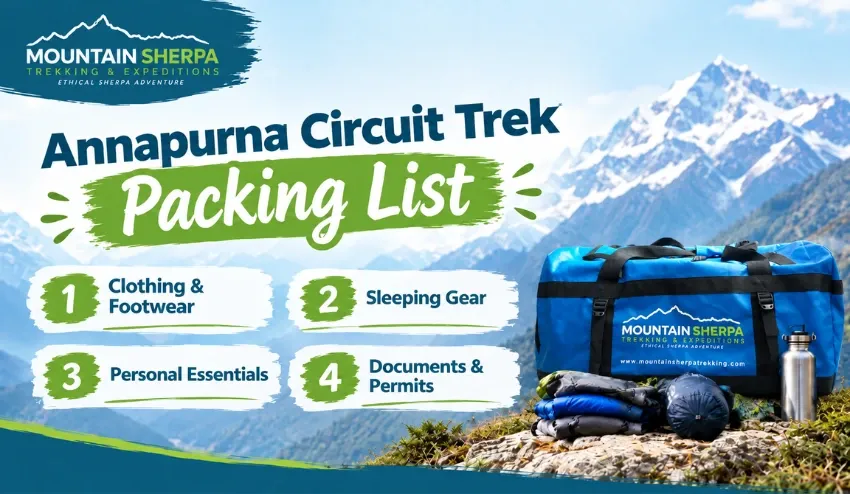
Packing for the Annapurna Circuit Trek requires a balance between staying prepared and keeping your luggage light. The route passes through changing landscapes and elevations, eventually reaching Thorong La Pass at 5,416 meters (17,770 feet), so you need clothing and equipment for both lower-elevation conditions and cold mountain weather.
The most important rule is to avoid overpacking. Your trekking kit bag should ideally stay within 12–15 kg (26–33 lb). A lighter bag makes it easier to organize your belongings and reduces the amount of unnecessary weight carried during the trek.
This Annapurna Circuit Trek packing list covers clothing, footwear, sleeping gear, toiletries, food and snacks, documents, electronics, first-aid supplies, and optional trekking equipment. It also explains what should go in your daypack, what should go in your duffel bag, and which items may be available through the trekking package.
You do not necessarily need expensive branded equipment. Choose reliable gear that you have used and are comfortable with. If you need to purchase trekking clothes or equipment before the trek, Thamel in Kathmandu has many trekking stores where a wide range of gear is available.
|
Category |
Essential Items |
|
Head & Eyes |
Sun hat, warm hat, sunglasses, headlamp, neck gaiter |
|
Hands |
Fleece/wool gloves, glove liners, shell gloves |
|
Upper Body |
Base layers, moisture-wicking shirts, fleece, insulated jacket |
|
Lower Body |
Hiking pants, warm pants, long underwear, rain pants |
|
Footwear |
Hiking boots, camp shoes, 5–7 pairs of hiking socks |
|
Sleeping |
Sleeping bag, sleeping bag liner if preferred |
|
Hydration |
Two 1-liter water bottles, purification tablets |
|
Food |
Snacks, rehydration powder or gels, optional thermos |
|
Toiletries |
Sunscreen, lip balm, toilet paper, soap, toothbrush, wet wipes |
|
Documents |
Passport, visa documents, travel insurance, airline tickets |
|
Money |
Cash, durable wallet or document pouch |
|
Electronics |
Phone, power bank/solar charger, camera if desired |
|
Health |
Personal medication, basic first-aid supplies, blister treatment |
|
Optional Gear |
Trekking poles, scarf/buff, earplugs, repair kit, reusable bag |
One of the most important parts of preparing for the Annapurna Circuit is keeping your luggage manageable.
The recommended packed weight of your trekking duffel should not exceed approximately 15 kg (33 lb). Ideally, keep it around 12–15 kg (26–33 lb).
The trekking arrangement includes porter support, with one porter serving two trekkers. Porters may carry approximately 25–30 kg (55–66 lb) of personal items between two people, including sleeping bags and down jackets. However, this does not mean you should fill your duffel to its maximum possible weight.
A practical approach is:
Duffel bag: approximately 12–15 kg (26–33 lb)
Daypack: carry only the items you need during the day's walk
Non-trekking luggage: leave unnecessary items at your Kathmandu hotel
Keeping your personal trekking gear light makes the journey more comfortable and helps you avoid carrying items you will rarely use.
Your trekking equipment is generally divided between two bags: a daypack that you carry yourself and a duffel bag that is transported between tea houses by porters.
This makes it easier to keep your daily essentials accessible without carrying your entire trekking kit.
A smaller daypack is generally more practical for the trek. A capacity of around 25–30 liters is recommended, together with a waterproof cover.
Your daypack can contain:
Water bottles
Extra money
Sun hat
Camera or phone
Important documents
Sunscreen
Hand sanitizer
Rain gear
Small toiletries
Snacks
Personal medication
Other items you may need during the day's walk
Keep the things you may need during the day near the top of your backpack. There is no reason to open your main duffel every time you need sunscreen, a rain layer, or an extra snack.
Your duffel should contain the majority of your trekking equipment, including:
Extra clothes
Warm layers
Hiking pants
Underwear
Hiking socks
Sleeping bag
Toiletries
Camp shoes
Gloves
Less frequently used personal items
Other equipment you do not need while walking
A waterproof duffel is particularly useful in the mountains. The trekking package provides a complimentary duffel bag in Kathmandu for packing your essential trekking equipment.

The Annapurna Circuit passes through different elevations, so a layering system is more practical than carrying several bulky jackets.
Base-layer shirts
Moisture-wicking long-sleeve shirt
One moisture-wicking short-sleeve shirt if preferred
Long underwear
Four to five pairs of underwear
Synthetic sports bras for women, if needed
Base layers help manage moisture and can be combined with warmer layers as temperatures change.
Fleece jacket
Warm windproof jacket with hood
A fleece or warm mid-layer can be worn over your base layer during colder mornings, evenings, and higher sections of the trek.
An insulated warm jacket is one of the most important items on a high-altitude trek.
The jacket should provide enough warmth for cold conditions, particularly around higher elevations and during early starts.
If you do not have your own suitable down jacket, the trekking package provides a good down jacket with a hood for complimentary use.
One to two pairs of lightweight hiking pants
Convertible or quick-drying hiking pants
Warm hiking pants
Long underwear
Lightweight and quick-drying clothing is generally more practical for trekking than heavy clothing that takes a long time to dry.
Lightweight waterproof rain pants
Waterproof and breathable outer protection
Mountain weather can change, so having rain protection accessible in your daypack is useful.

Sun and cold protection are both important on the Annapurna Circuit.
A lightweight sun hat helps protect your face and head during sunny sections of the trail.
Bring a wool or synthetic hat that covers your ears. A warm hat becomes particularly useful at higher elevations and during cold mornings and evenings.
Choose sunglasses with UV protection.
They are particularly important when trekking in bright mountain conditions.
A neck gaiter or bandana can provide protection from:
Strong sunlight
Dust
Wind
Cold air
Face masks can also be included in your personal trekking kit if you prefer to use them.
Sunscreen
Lip balm with sunscreen
Suitable face lotion
Sun exposure can be strong at higher elevations, so sun protection should remain accessible in your daypack.
Your hands can experience significantly colder conditions as you gain altitude.
A practical glove system includes:
Fleece or wool gloves
Glove liners
Heavier shell gloves
Layering gloves allows you to adjust according to temperature and activity rather than carrying one very bulky pair.
Good footwear is one of the most important parts of your Annapurna Circuit Trek packing list.
Bring comfortable hiking boots with suitable ankle support.
Most importantly, break your boots in before the trek. Starting a long mountain trek with brand-new boots can lead to discomfort and blisters.
Pack a lightweight pair of camp shoes or tennis shoes for use at the lodges after trekking.
Having a second pair gives your feet a chance to get out of your hiking boots at the end of the day.
Pack approximately 5–7 pairs of synthetic or wool hiking socks.
Wool or synthetic socks can be useful because they are designed for trekking conditions and can help manage moisture better than ordinary cotton socks.
A suitable sleeping bag is an important part of your high-altitude trekking gear.
The recommended sleeping bag in the provided packing list has a comfort rating around –10°C.
If you already have an appropriate sleeping bag, you can bring your own.
If you do not have one, Mountain Sherpa Trekking states that it can provide a 4-season sleeping bag for complimentary use. A suitable down jacket can also be provided if needed.
Always confirm the equipment arrangement with your trekking company before departure.
You can carry lightweight snacks for additional energy during long trekking days.
Useful options include:
Energy bars
Nuts
Dried fruit
Chocolate
Protein-rich snacks
Other lightweight snacks containing carbohydrates
Rehydration gels or powder
A good approach is to combine protein and carbohydrates rather than carrying only sugary snacks.
A thermos is optional but can be useful if you enjoy having a hot drink available during colder parts of the day.
Toiletries and Personal Hygiene
Keep your toiletries compact and travel-sized whenever possible.
Sunscreen
Lip balm with sunscreen
Toilet paper
Soap
Deodorant
Toothbrush
Toothpaste
Razor, if needed
Shampoo
Wet wipes
Hand sanitizer
Feminine hygiene products, if needed
Face lotion
Hairbrush
Hair ties
You do not need full-size bottles of everything. Smaller containers can save considerable space and weight.
Toilet paper is also available at lodges along the route, but it is still useful to carry a small amount in your daypack.
Bring two 1-liter water bottles so you can carry enough water for the day's trekking needs.
The provided packing guidance encourages trekkers to refill reusable bottles rather than relying on single-use plastic bottles.
You should also carry:
Water purification tablets
Reusable water bottles
Optional rehydration powder or gels
Water treatment is an important precaution when using water sources that require purification.
Keep important documents protected in a durable wallet or waterproof pouch.
Passport
Extra passport-size photographs
Visa documentation
Travel insurance details
Airline tickets
Copies of important travel documents
Durable wallet or travel pouch
Cash
The provided packing guidance suggests carrying approximately $200–300 in cash because ATM availability on the trekking route may be unreliable.
Rather than carrying all your money in one place, keep your cash and important documents organized and protected.
Keep your passport accessible and protected.
For visa-related requirements and current fees, check the latest official Nepal immigration information before traveling, as requirements and fees can change.
Travel insurance is one of the most important documents to arrange before an Annapurna Circuit Trek.
Your policy should be appropriate for the nature and altitude of your planned trek. Check the policy conditions carefully, including coverage for trekking at high altitude and emergency assistance.
Keep a digital and physical copy of your insurance information.
Before you leave for Nepal, you can also review Mountain Sherpa Trekking Nepal Travel Insurance information to understand the type of coverage you should consider.
You do not need to carry every electronic device you own.
Useful items include:
Smartphone
Charging cable
Power bank
Portable solar charger, if desired
Camera, if desired
Spare batteries, if needed
A power bank can be useful when charging opportunities are limited or inconvenient.
Keep electronics protected from moisture and avoid carrying unnecessary devices simply because you can.
A compact first-aid kit can be useful during the trek.
The provided packing guidance includes:
Antiseptic cream
Throat lozenges
Plasters
Blister treatment
Rehydration salts
Pain relief medication
Diarrhea treatment
Personal medication
Insect repellent
The original packing guidance also mentions altitude medication such as Diamox. However, medication for altitude or other medical conditions should not be taken simply because it appears on a packing list. If you are considering altitude medication, discuss it with a qualified medical professional before your trek.
If you regularly take prescription medication, carry enough for the trip and keep it in your daypack rather than placing it in your checked or porter-carried luggage.
Several small items can make the trek more convenient.
Small padlock
Travel towel
Headlamp with fresh batteries
Portable charger
Small repair kit
Durable document pouch
Reusable cloth bag
Journal and pen
Book
Playing cards
A headlamp with fresh batteries is particularly useful for early mornings and moving around the lodge after dark.
Not everything on a trekking gear list is essential.
The following items can be useful depending on your personal preferences:
Trekking poles
Sleeping bag liner
Pillowcase
Scarf or buff
Swimwear for your Kathmandu hotel
Earplugs
Travel clothes
Camera
Small repair kit
Reusable cloth shopping bag
Trekking poles are optional, but many trekkers find them useful on long ascents and descents.
If you do not have your own poles, the trekking package states that trekking poles can be provided for complimentary use.
A sleeping bag liner is optional and can provide an additional layer of comfort and cleanliness.
Earplugs can be useful if you are a light sleeper, particularly when staying in shared or busy lodge environments.
A small repair kit can include:
Needle
Thread
Duct tape
Other basic repair items
There is no need to carry a large tool kit.
One useful part of planning your Annapurna Circuit packing list is knowing what equipment may already be available through your trekking package.
Mountain Sherpa Trekking provides:
Complimentary waterproof duffel bag
T-shirt
Water bottle
Trekking poles
Trek map
Group medical kit
Down jacket if needed
4-season sleeping bag if needed
Luggage storage before and after the trek
Assistance with trekking gear rental or purchase
This means you do not necessarily need to purchase every piece of trekking equipment before arriving in Nepal.
Always confirm the current equipment inclusions with the trekking company before your departure because package services can change.
Once you have collected your gear, organize your duffel according to how often you will need each item.
Place items that you will not need frequently, such as:
Spare clothes
Extra casual clothing
Less-used personal items
Fleece
Extra hiking clothes
Toiletries
Sleeping gear
Keep items you may need more frequently accessible:
Warm jacket
Gloves
Extra socks
Rain protection
Your most frequently needed daytime items should remain in your daypack rather than your duffel.
Your daypack should contain the items you may need while walking.
A practical daypack checklist includes:
Water bottles
Extra money
Snacks
Sun hat
Sunglasses
Camera/phone
Important documents
Sunscreen
Lip balm
Hand sanitizer
Rain gear
Personal medication
Headlamp
Extra layer
The principle is simple:
Your daypack should contain what you need during the day; your duffel should contain what you need at the lodge.
Thorong La is the highest point of the Annapurna Circuit itinerary at approximately 5,416 m (17,770 ft).
You should make sure your cold-weather gear is easy to access before the pass crossing.
Keep the following readily available:
Warm insulated jacket
Fleece layer
Warm hat
Gloves
Base layer
Hiking pants
Long underwear
Sunglasses
Sunscreen
Water
Snacks
Headlamp
Personal medication
Weather protection
Do not bury these items at the bottom of your duffel.
The conditions can be considerably colder at high elevations, so being able to add or remove layers quickly is much more practical than carrying a single heavy outfit.
For a better understanding of how the route reaches Thorong La and how the days are structured, see the Annapurna Circuit Trek Itinerary guide.
Your exact clothing combination can change depending on when you trek.
For spring, focus on a flexible layering system:
Lightweight trekking shirts
Fleece
Insulated jacket
Hiking pants
Sun hat
Sunglasses
Sunscreen
Gloves
Rain protection
Temperatures can still be cold at higher elevations, so do not leave your warm layers behind.
If you travel during wetter conditions, prioritize:
Your clothing should be easy to dry and your important items should be protected from rain.
Autumn is one of the main trekking periods in Nepal.
Moisture-wicking base layers
Fleece
Insulated jacket
Hiking pants
Warm hat
Gloves
Sunglasses
Sunscreen
Rain/wind protection
Winter requires more attention to cold-weather equipment.
Warm insulated jacket
Fleece
Thermal/long underwear
Warm hiking pants
Wool or synthetic hat
Warm gloves
Sleeping bag
Gaiters
The provided packing guidance specifically recommends gaiters for December to February.
Overpacking is one of the easiest mistakes to make before a long trek.
Avoid bringing unnecessary quantities of:
Heavy cotton clothing
Multiple pairs of heavy shoes
Full-size toiletries
Several bulky jackets
Unnecessary electronics
Large books
Duplicate equipment
Items you will only use once
Instead, prioritize versatile clothing that can be layered.
For example, one good fleece and one insulated jacket are generally more practical than several bulky sweaters.
The goal is to have enough equipment for changing conditions without carrying unnecessary weight.
While preparing your trekking wardrobe, it is also useful to consider local customs.
Nepal has diverse cultural traditions, and modest clothing is generally appropriate when visiting villages, religious sites, and local communities.
When visiting temples, monasteries, and traditional communities, avoid overly revealing clothing or sleeveless tops.
Comfortable trekking shorts can be practical in suitable conditions, but modest clothing is recommended when entering religious or culturally sensitive places.
Being respectful of local customs makes your experience more comfortable and considerate for both travelers and local communities.
Use this final checklist before leaving for Nepal.
Base-layer shirts
Moisture-wicking long-sleeve shirt
Moisture-wicking short-sleeve shirt
Fleece jacket
Insulated warm jacket
Hiking pants
Warm hiking pants
Long underwear
Underwear
Rain pants
Sun hat
Warm hat
Sunglasses
Neck gaiter or bandana
Face mask
Fleece/wool gloves
Glove liners
Shell gloves
Sunscreen
Lip balm with sunscreen
Hiking boots
Camp/lodge shoes
5–7 pairs hiking socks
Gaiters if trekking in winter
Sleeping bag
Sleeping bag liner, if desired
Snacks
Two 1-liter water bottles
Water purification tablets
Rehydration powder or gels
Thermos, optional
Toothbrush
Toothpaste
Soap
Shampoo
Deodorant
Toilet paper
Wet wipes
Hand sanitizer
Face lotion
Hairbrush
Hair ties
Feminine hygiene products, if needed
Razor, if needed
Passport
Passport-size photos
Visa documentation
Travel insurance
Airline tickets
Copies of important documents
Cash
Durable document pouch
Daypack
Waterproof daypack cover
Duffel bag
Headlamp
Trekking poles, optional
Small padlock
Travel towel
Repair kit
Phone
Charging cable
Power bank
Portable solar charger, optional
Camera, optional
Spare batteries, if needed
Personal medication
Antiseptic cream
Plasters
Blister treatment
Rehydration salts
Throat lozenges
Appropriate pain relief
Insect repellent
The classic Annapurna Circuit is not the only way to explore the Annapurna region.
If you are looking for a different trekking experience, the region has several alternatives.
For a route combining Ghorepani, Poon Hill, traditional villages, rhododendron forests, and Annapurna Base Camp, you can explore the Annapurna Sanctuary Trek.
If you prefer a quieter route with mountain scenery and a different trekking experience, the Khopra Ridge Trek is another option in the Annapurna region.
Travelers who want a longer Annapurna-region journey can also look at the Annapurna Round Trek.
These routes have different itineraries, elevations, walking demands, and landscapes, so your packing list should always be adjusted according to the specific trek you choose.
A good Annapurna Circuit Trek packing list is not about carrying more gear. It is about carrying the right gear.
Prioritize a reliable layering system, comfortable hiking boots, warm clothing, sun protection, hydration equipment, personal medication, and important travel documents. Keep your duffel within approximately 12–15 kg (26–33 lb) and use your daypack only for the items you need while walking.
Remember that the Annapurna Circuit reaches Thorong La at 5,416 m (17,770 ft), so your warm layers and cold-weather equipment should be suitable for high-altitude conditions.
Before departure, check your complete list one more time and separate your belongings into your daypack and trekking duffel. If you are trekking with Mountain Sherpa Trekking, confirm which complimentary equipment is available so you do not carry or purchase items unnecessarily.
If you are still unsure about what to pack for your specific itinerary, talk to an Annapurna trekking expert before your trip.
Talk to an Annapurna Trekking Expert
Pack layered clothing, comfortable hiking boots, hiking socks, an insulated jacket, gloves, a warm hat, sleeping gear, toiletries, water bottles, personal medication, travel documents, and essential trekking accessories. Keep the trekking duffel around 12–15 kg (26–33 lb).
The recommended trekking duffel weight is approximately 12–15 kg (26–33 lb). Keep your daypack lighter and use it only for items you need during the day's trek.
A suitable sleeping bag is recommended. The provided package information states that a 4-season sleeping bag can be provided for complimentary use if you do not have your own.
A daypack of approximately 25–30 liters is recommended. Choose one with a waterproof cover and keep it limited to daily essentials.
Trekking poles are optional, but they can be useful on steep ascents and descents. If you do not have your own, the package information states that trekking poles can be provided for complimentary use.
Comfortable hiking boots with suitable ankle support are recommended. Break them in before your trek to reduce the chance of blisters and discomfort.
Bring your warmest layers, including an insulated jacket, fleece, warm hat, gloves, long underwear, sunglasses, sunscreen, water, snacks, and weather protection. Keep these items easily accessible before the Thorong La crossing.
Yes. The provided trekking information notes that trekking gear and clothing are available in shops in Thamel, Kathmandu. This can be useful if you need to purchase or replace equipment before starting your trek.
No. The trekking arrangement includes porter support for the main duffel, while you carry your own daypack during the trekking day. Your daypack should contain only the items you need while walking.
The package information states that a complimentary waterproof duffel bag, water bottle, trekking pole, trek map, group medical kit, down jacket, and 4-season sleeping bag can be provided depending on your needs and package arrangements. Confirm the current inclusions before departure.