-
Sumba Sherpa (Co-Founder & CEO)
+977-9849643731
Since 1998 15,000+ Happy Guests Sherpa Owned & Operated Company
If you are planning your first high-altitude trek in Nepal, you may be wondering whether the Gokyo Ri Trek is suitable for you.
Gokyo Ri is NOT a casual day hike. The trail draws you deep into the Everest region and involves long days of walking, sections of steep ascent, and passes over 5000m. However, previous Himalayan trekking experience is not essential if you are physically prepared and follow a gradual itinerary.
If you are reasonably fit and on a gradual itinerary, allow yourself time to acclimatise, then a first-time trekker should be able to undertake the Gokyo Valley and summit Gokyo Ri.
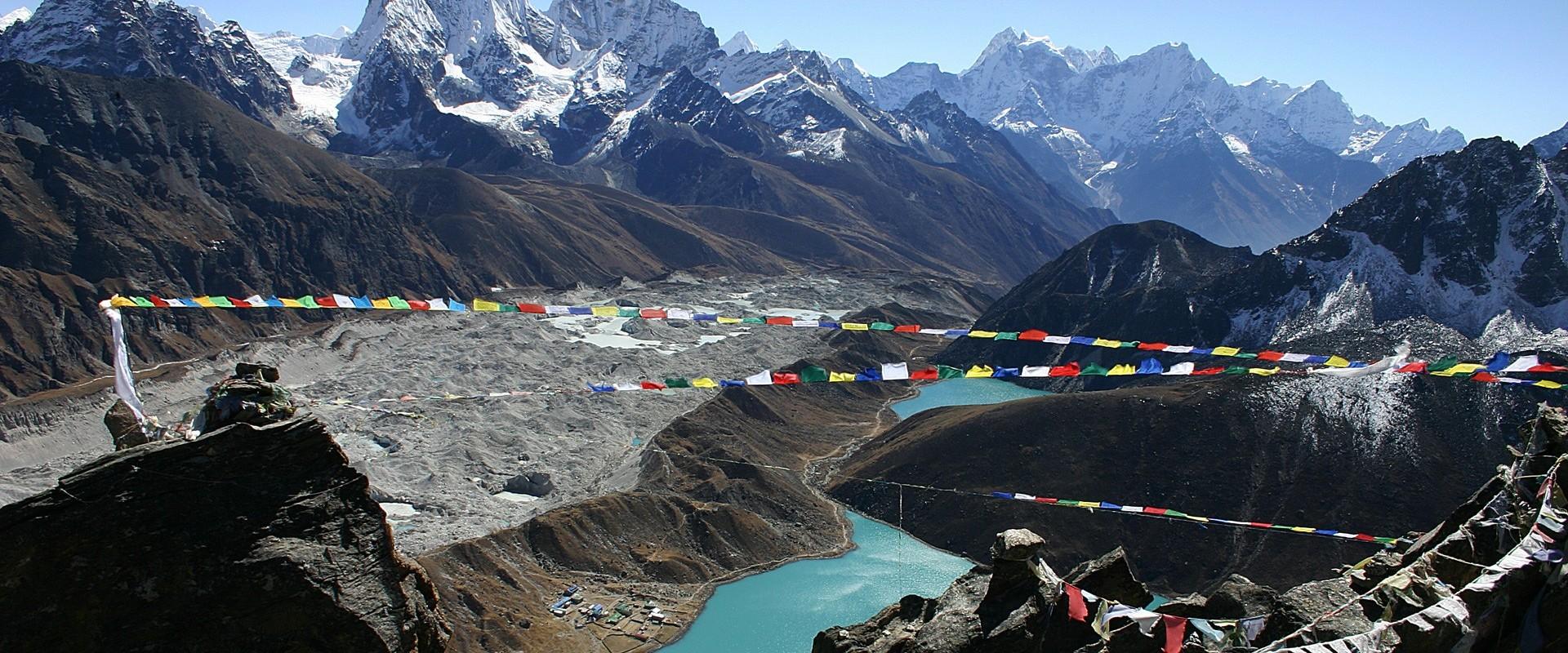
The reward is the opportunity to experience a quieter side of the Khumbu, with glacial lakes, Sherpa villages and panoramic Himalayan views. The path is famous for its glacial lakes, mountain views, Sherpa villages and the incredible views from the top of Gokyo Ri. According to the Nepal Tourism Board, Gokyo is an alternative route to get into the Khumbu and offers views of Cho Oyu, Everest, Lhotse and Makalu

Gokyo Ri Trek is a high-altitude trekking route in the Everest region of Nepal that takes you to Gokyo Valley and the top of Gokyo Ri at a height of about 5357 meters.
Gokyo Valley – located west of the main Khumbu valley, this beautiful area is situated in the Sagarmatha National Park. It is popular due to its pristine blue glacial lakes and Himalayan panorama.
Unlike the classic Everest Base Camp route, the Gokyo route heads towards Dole and Machhermo before reaching Gokyo. The route takes you through forests, mountain villages and the Ngozumpa Glacier before finally reaching Gokyo Lakes.
The highlight is the climb to Gokyo Ri. From this vantage point, trekkers are treated to a spectacular view of the Himalaya if the weather is clear.
Yes, but one must first clarify what a "beginner" is.
You do not require prior Everest trekking experience but must be ready for some walking at high altitude over a number of days. A reasonably fit beginner who undertakes some training before setting out can prepare in good time.
The biggest challenges are usually:
A well-paced itinerary allows your body to acclimatize as you ascend. If you are a novice trekker, then reading about treks in Nepal for beginners might give you an idea of what a mountain trail is all about.
The Gokyo Ri Trek is generally considered a challenging high-altitude trek.
For beginners, the challenge is not so much about technical climbing but more about distance and altitude gain with varied terrain.
As you walk, you'll find yourself stepping on rugged paths, stone steps, suspension bridges, and trails leading up the mountain. Some days will be somewhat manageable, but others will be quite strenuous.
Towards the end, the climb to Gokyo Ri was one of the more strenuous parts of the trek. From Gokyo the trail takes a sharp and steady climb, and the reduced oxygen levels make it more difficult than an equivalent climb at sea level.
That doesn't mean it's not suitable for beginners. It just means that how you plan it and where you go to is important.
The Gokyo Ri Trek is suitable for prepared beginners, but it is still a challenging high-altitude trek. The main challenges include:
Gokyo sits at about 4,790 meters (15,715 feet), while Gokyo Ri reaches 5,357 meters (17,575 feet). Proper acclimatization and a gradual pace are essential.
The final climb to Gokyo Ri is steep and demanding, especially in thin air. Walking slowly and taking short breaks can help.
Several days involve hours of walking on mountain trails. Regular walking and hill training before the trek can improve endurance.
The route includes rocky paths, stone steps, suspension bridges, and steep sections. Good trekking boots and trekking poles can provide better stability.
Weather can change quickly at high elevations. Warm layers, waterproof clothing, gloves, and a hat are important.
Accommodation and food options become more basic at higher elevations. Beginners should be prepared for simple rooms and limited facilities.
With proper preparation, gradual acclimatization, and a sensible itinerary, beginners can manage these challenges successfully.

Altitude is one of the most crucial lessons for beginners to grasp before beginning the trek.
| Location | Approximate Elevation |
| Kathmandu | 1,400 m / 4,593 ft |
| Namche Bazaar | 3,440 m / 11,286 ft |
| Dole | 4,200 m / 13,780 ft |
| Machhermo | 4,470 m / 14,665 ft |
| Gokyo | 4,790 m / 15,715 ft |
| Gokyo Ri | 5,357 m / 17,575 ft |
You descend further into the Khumbu, the elevation goes up.
Gokyo Ri is 5357 meters itself, so acclimatization is a real problem. Nepal Tourism Board again mentions Gokyo Ri at 5357 meters.
For first-timers, you shouldn't judge a trek solely on kilometers covered. For instance, a 6-8 hours day at high altitude could be just as strenuous as a 15-16 hours walk at much lower altitude.
Even a beginner itinerary should give ample time to gain altitude slowly and allow for acclimatization.
A typical route may look like this:
| Day | Route / Activity | Elevation |
| Day 1 | Arrive in Kathmandu and transfer to hotel | 1,400 m / 4,593 ft |
| Day 2 | Kathmandu city tour and trek preparation | 1,400 m / 4,593 ft |
| Day 3 | Fly to Lukla and trek to Phakding | 2,652 m / 8,701 ft |
| Day 4 | Trek to Namche Bazaar | 3,440 m / 11,286 ft |
| Day 5 | Hike to Kunde & Khumjung and visit Everest View Hotel | Around 3,800 m / 12,467 ft |
| Day 6 | Trek to Phortse Thanga | 3,680 m / 12,073 ft |
| Day 7 | Trek to Machhermo | 4,470 m / 14,665 ft |
| Day 8 | Rest and acclimatization at Machhermo | 4,470 m / 14,665 ft |
| Day 9 | Trek to Gokyo | 4,790 m / 15,715 ft |
| Day 10 | Hike Gokyo Ri and return to Machhermo | 5,357 m / 17,575 ft |
| Day 11 | Trek back to Namche Bazaar | 3,440 m / 11,286 ft |
| Day 12 | Trek to Lukla | 2,800 m / 9,186 ft |
| Day 13 | Fly to Kathmandu and relax | - |
| Day 14 | Reserve day for possible flight cancellation | - |
| Day 15 | Airport transfer and departure | - |
Exact itinerary may differ from operator to operator due to weather, flight schedule, and acclimatization plan.
If you are searching for a complete set of Gokyo Lake and Gokyo Ri trek itineraries, this short trek package will be a good option for you. It is a longer version of the complete Gokyo Lake and Gokyo Ri trek in 15 days.
The key message for first-time climbers is don't select a route just because it's the shortest! A little extra time on the mountain can make the climb more enjoyable and safer.
Most Gokyo Ri itineraries take around two weeks when Kathmandu, transportation and acclimatization days are included.
The walking bit itself is a lot shorter than the whole holiday, as you need to account for time spent on flights, packing, and unforeseen delays.
For international visitors, it's advisable to remain somewhat flexible in your itinerary. Regarding flights arriving and departing from the Everest area, climatic conditions might cause delays.
A longer itinerary doesn't have to be a slower pace. More time for your body to acclimatise when you're new to high altitude and to take in the scenery.
The Gokyo Ri Trek costs will vary according to the itinerary and services.
Before booking, consider the following expenses:
As you go up higher into the mountains, accommodation and food generally become more basic.
Gokyo Ri Trek Cost provides a comprehensive overview of costs.
When pricing up trekking trips, remember to factor in transportation, permits, accommodation, food, guide services and emergency support.
The most popular periods for the Gokyo Ri Trek are spring and autumn.
The best time of year to go trekking is in the spring. This time of year usually has great weather for trekking, warmer weather near the bottoms of the mountains, and good views of the mountains.
It's also a busy season, so the trails and teahouses will be busy.
The best trekking season in autumn. A popular trekking season for travelers who want to enjoy clear mountain views and a smooth trip during this time of the year.
This is another time when the trail can be crowded.
Winter is a little bit colder and a little tougher to operate in at higher elevations.
Those who have done the trek previously and are seasoned trekkers may wish to do a winter trek, but even then you will need the correct clothing and equipment, and to plan more carefully.
The monsoon brings more rain and cloud cover to large areas of Nepal. The weather can be more unpredictable at this time of year, which could lead to problems with visibility and transport.
For broader seasonal planning, see Best Time to Trek in Nepal.
When preparing for Gokyo Ri, your packing list should focus on staying warm, comfortable, and prepared for changing mountain conditions.
Don't buy high-end kit just because you're on your first trek. Invest in proven, comfy kit that can cope with anything from icy cold, wet and changeable conditions.

Acclimatization is one of the most important parts of a high-altitude trek. As you gain elevation, your body needs time to adjust to the lower oxygen levels. This is why a well-planned itinerary includes rest and acclimatization days.
At higher elevation, the decreased oxygen would lead to muscle fatigue, for example, requiring an acclimatisation period. For this reason, good travel itineraries should allow sufficient time to rest and acclimatise.
For beginners, some simple principles are useful:
However, proper acclimatization should be observed not only on the Everest Base Camp trek route but also in the whole Everest region. Please read Why is proper acclimatization critical to avoid altitude sickness on the EBC trek for more information.
Along the Gokyo route, the majority of trekkers stay in local teahouses.
Accommodation is normally easy, even in the higher regions; rooms can be minimal with a bed and shared toilet & bath, with a dining space to eat and warm up.
Food choices generally consist of dal bhat, rice, noodles, soup, potatoes, eggs, bread and hot beverages.
You may find that the range of stocks starts to reduce the further you go up the mountain as supplies need to be carried into such far-flung mountain villages.
Part of the experience. First-timers expecting five-star amenities for the duration of the trek may be disappointed, whereas travelers accustomed to teahouse trekking style tend to adapt more easily.
It is possible for first-timers to take on Gokyo Ri. But remember this is high altitude, and you should be prepared for it.
The key factors include altitude, weather, trail conditions, and supply points at dispersed locations.
A licensed guide can assist with route choice, pacing, conveying information, and making decisions when weather and trail conditions change.
The existing rules are significant also. According to the Nepal Tourism Board's existing TIMS details, the Gokyo Trek is included within the Everest-region route on which trekkers are required to be in the company of a licensed trekking guide and to possess a TIMS card issued by a trekking agency in terms of the provisions applicable.
Rules are subject to change, so it's essential to verify current official requirements before traveling.
For additional practical safety advice, see How to trek Everest Base Camp safely?
Both routes offer an excellent introduction to Nepal's Everest region, but the experience is different.
| Gokyo Ri | Everest Base Camp |
| Gokyo Lakes | Everest Base Camp |
| Panoramic mountain views | Classic Everest experience |
| Glaciers and high valleys | Famous Khumbu landmarks |
| Generally quieter | Generally busier |
| Strong focus on scenery | Strong focus on the Everest destination |
If you don't intend to target Mount Everest Base Camp, the Gokyo Ri is very scenic and has the added benefit of numerous lakes.
If getting to the world-renowned base camp is your main aim, then EBC may be the better option.
Neither trek is automatically better for beginners. The better choice depends on your fitness, interests, available time, and tolerance for high-altitude trekking.
Yes, however, combining both ends up being a longer and more demanding journey.
One of the main alternatives is to join the Gokyo Valley with the Everest Base Camp Trekking route on the Cho La Pass. It offers a wider view of the Khumbu, but it's a longer trip.
If you are sufficiently time-abundant and familiar with difficult high-altitude terrain, the EBC Gokyo Cho La Pass Trek is a route that takes in both regions.
For a first Himalayan trek, however, it is reasonable to do a single route rather than cramming all the main places into one trip.
You do not need to be an endurance athlete, but some preparation can make the trek considerably easier.
Begin with walking on a regular basis. It is essential that you gradually increase your walking distance.
Inclines prepare your legs for the repeated uphill sections of the Khumbu.
Try occasional longer walks so you know how your body responds after several hours on your feet.
Do not wear brand-new trekking boots for the first time on the trail.
Temperatures can drop significantly at higher elevations, so pack suitable layers.
Do not try to compensate for limited holiday time by removing essential acclimatization days.
Weather can affect flights and mountain travel, so some flexibility is valuable.
The preparation principles are similar to those explained in How to Prepare for Everest Base Camp Trek?
If this is your first Himalayan trek, keep the planning simple.
Choose an itinerary that allows enough time for acclimatization, train before arriving in Nepal and prepare for changing weather conditions.
Don’t just concentrate on bagging the summit of Gokyo Ri. The villages, Gokyo Lakes, glaciers, and mountain scenery are part of what you came here for.
Just one thing: you should follow your guide, respect the altitude, and not be in a hurry.
Yes, if you are prepared for a challenging high-altitude trek.
Gokyo Ri is a good combination of Himalayan scenery, glacial lakes, Sherpa culture, and a quieter trekking experience, including stunning Himalayan views, glacial lakes, Sherpa culture, and a more peaceful trek than the more popular approach to Everest Base Camp.
It is a challenging trek, but no previous experience of high altitude trekking is necessary.
The best approach is to arrive prepared, follow a sensible itinerary and give yourself enough time to enjoy the journey.
Yes. With a decent level of fitness, adequate preparation, and proper acclimatization, it can be done by novices.
2. How high is Gokyo Ri?
Gokyo Ri is approximately 5,357 meters (17,575 feet) above sea level.
3. How many days does Gokyo Ri Trek take?
Most itineraries take around two weeks, depending on the route and acclimatization schedule.
4. What is the best time for Gokyo Ri Trek?
Spring and autumn are generally the most popular seasons for trekking in the Gokyo region.
5. Do beginners need a guide for Gokyo Ri?
Currently, according to the Nepal Tourism Board TIMS regulations, Gokyo is considered a route in the Everest region that requires a licensed TLA to be present with a TIMS card issued by an agency.
6. Is Gokyo Ri harder than Everest Base Camp?
Both are tough. Gokyo Ri has a steep viewpoint ascent, and EBC entails multiple tough days at high altitude.
7. Can I do Gokyo Ri without previous trekking experience?
Yes. Previous experience helps, but good preparation, fitness, and acclimatization are more important.